
By John RC Potter
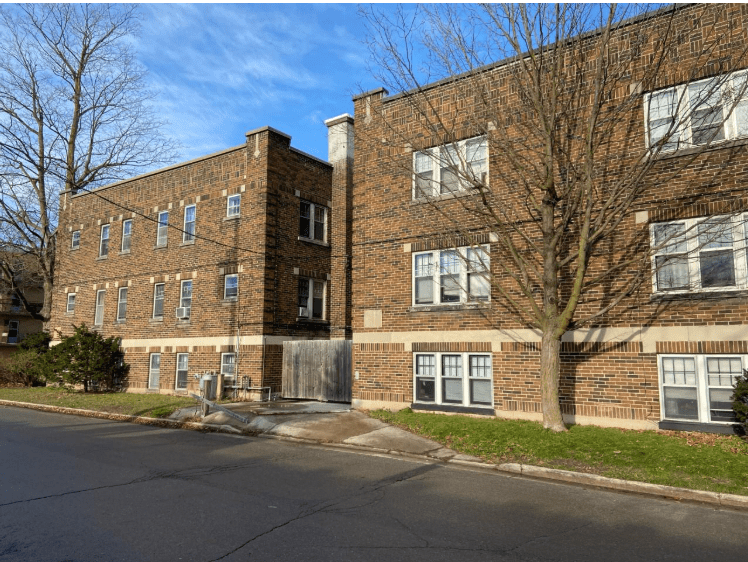
There are people one meets during one’s lifetime who are larger-than-life: the expression, ‘real characters’ comes to mind, the kind who could have sprung from the pages of a delightful book. I had the great fortune to meet an endearing ‘character’ decades ago, when I moved into a charming red-brick building called the ‘Boug Apartments’ in the area of London that is still known as ‘Old South.’ The city of London in southwestern Ontario, Canada, was named in honour of its much larger namesake ‘across the pond.’ There are affinities between the two cities; for example, the smaller, provincial city has a Thames River and Regent Street, and in the older, more historic parts of Canadian London, there are residential houses and buildings that would look right at home in its British counterpart.
Who was the endearing character I met all those years ago at the Boug Apartments? Her name was Susan McKone – but she always preferred being called ‘Susie,’ which seemed to suit her so well. It was in the early 1980s that I moved into the distinctive red-brick building, built earlier in the century. It was actually three separate buildings, built at differing phases and connected by hallways; there were three floors – a raised basement with two floors above it. All three buildings were quaint, but the one that fronted on Ridout Street was the most charming and the oldest. The apartments had a small, latched cupboard beside the entrance door of each unit, which had once been used for milk and bread deliveries.
Additionally, the doorways throughout those units featured archways, and the ceilings were coved. The apartments were spacious, although the second bedroom was not much bigger than a closet. In each unit in the first building, there was a fireplace (at one time coal burning, but subsequently outfitted with electric logs to give the illusion of a real fire). Gorgeous and well-maintained wooden floors were throughout the apartments, except for distinctive black-and-white tile flooring in the kitchen and bathroom. I loved my apartment, because it was not only quaint, but also affordable. In short order, I had it looking like all the homes I have ever lived in: very charming, extremely cosy, and somewhat cluttered.
Although I was in the first building and pleased as punch, I had wished for an apartment that fronted on Ridout Street. Those units had a fantastic view, and on the raised first and second floors, a shared balcony was located between the two front apartments. There were two apartments on each floor per building. My apartment had a view of the side street on one side and the second building on the other. I would live at the Boug on two separate occasions, in two different apartments, at various points in my life. In the first period, I lived in the front building, and a good friend, Steve, would eventually live in another apartment at the rear of the building. Within a few years, Steve moved to Toronto. In the second period, I lived at the rear of the building, and another good friend, Juel (originally from my hometown of Clinton), moved into a basement unit in the same section of the Building.
I had no sooner moved into my apartment when there was a knock at the door. I opened it to discover an old woman: she had a shock of white hair, an ample bosom, an impish grin, and sparkling eyes. “Hello, my name is Susie,” she said, “and I live in the apartment across the hall from you, but at the front.” I introduced myself to Susie and told her a few details about myself. I also mentioned that I had been hoping to rent one of the front units, but the building manager told me they rarely became available. Susie confirmed that fact, stating she had been living in the building for decades, since the 1920s. When I met her, she was in her mid-eighties and, as dynamic as she had been when she was a younger woman, still obviously vibrant. It was the start of an unlikely friendship.
***
“It’s a great life if you don’t weaken,” Susie said, as I sat in her cosy living room. It was my first visit with Susie after she had come to my apartment to introduce herself. Susie had just informed me that she almost died after WWI; like millions of other people, she had been stricken with the virulent Spanish Flu. In her case, Susie managed to survive but only after months of being at death’s door and the subsequent process of recuperating. “I had just become a teacher,” she said, “and during that first year of teaching, I became extremely ill with the Spanish Flu. I was the youngest in the family, and my family thought I was going to die.” I was fascinated by her story and how she had managed to survive. I was also drawn to the old woman because she was a teacher, and I had aspirations to return to university and earn my undergraduate degree and teaching certificate.
Susie continued with the tale of her months-long, near-death experience after WWI. “I managed to survive the Spanish Flu, to my family’s surprise. My parents thought they’d be burying their youngest child, and my siblings were sure I was on my way out of this world.” Susie then chuckled and, with a grin, stated, “However, I not only ended up surviving, but have out-lived my entire family.”
Changing the subject, I asked Susie, “Why did you become a teacher?”
The old woman shrugged slightly and then said, “I had always wanted to be a teacher, but back then women didn’t have many options: they could become teachers, nurses, or secretaries, for the most part.”
“Was it difficult to return to teaching after being ill for so long?”
“When I was getting better,” Susie replied, “I started to get impatient to go back to work.” Peering at me, she continued in a serious tone, “You have to remember, I had only been teaching for less than a year when I was stricken with the Spanish Flu.” All of a sudden, Susie burst into a broad smile and, chuckling, stated her oft-repeated refrain: “It’s a great life if you don’t weaken!” Becoming more serious again, she said, “I was so happy to be back at work as a teacher. I lived with my family for a few years, but then I wanted my own place and moved here to the Boug Apartments decades ago and have been here ever since.”
Finding the old woman fascinating and full of life, I wanted to know more about her. “Where did you teach, and when did you retire?” I inquired.
Susie smiled impishly and responded, “For most of my teaching career, I taught at the same public school here in the Old South area, not far from here. Then, in the late 1950s, I retired and went on a year-long, around-the-world trip with a friend. That was really something, let me tell you!”
That first visit was followed by several more over the years. Susie told me that she had decided never to marry, although she had some beaus when she was young. She was busy with her teaching career and had many friends, which didn’t surprise me, given her engaging nature. Susie also told me that for many years she had a series of female roommates, apparently to augment her income. In her late 80s, Susie decided to have a pet for the first time; she adopted a cat and named her Delsie. The cat would remain with the old woman until Susie passed away at 99 several years later. During my time at the Boug Apartments, where I had the old woman as a neighbour, Susie owned an attractive sedan, a big Buick, which she parked in her garage at the rear of the property. One day, Susie asked me to go on an errand with her, and I rode shotgun as she careened her way on the streets of London and then beyond the city. Susie wanted to go outside London to her favourite fruit orchard and buy some apples, and have a pleasurable drive in the countryside. She was pleased to have company, and I was a happy chappy to be going on the journey with Susie.
***
The attractive and large Buick sedan was relatively new. I was riding in style! I was amazed that Susie had bought a new car a few years ago, despite being in her early 80s, instead of keeping her old vehicle. It was yet another example to me that she was young at heart. “I wanted a new car, and this one caught my eye in the car lot,” Susie explained with a twinkle in her eye as we backed out of the narrow garage. Chuckling, she stated emphatically, “You can’t take it with you!”
Susie slowly and expertly manoeuvred the big Buick backwards out of the garage. There were only three garages behind the apartment’s parking lot, one of which was Susie’s; having been at the Boug for so many years, Susie was one of the privileged tenants to have that distinction. The three garages were located in one long, low building, situated on a curve in the side street behind the property. I was astounded that Susie was able to back out of that narrow space so successfully. She backed up bit by bit, and when the car was fully emerged from her garage, and Susie could see in both directions, she carefully backed out onto the street.
Judging from the laborious manner in which Susie had backed her car out of the garage, I assumed it would be a leisurely jaunt as we went on our expedition to purchase some apples at the orchard.
As the saying goes, never assume! Susie put her pedal to the metal, and in a flash, we were zooming down the street toward Ridout Street in the near distance. For a moment, I was concerned that Susie wouldn’t brake for the stop sign on the busy cross street. At what seemed the last minute, she stomped on the brake. It was a good thing we both had our seatbelts on, I realised.
“Where is the apple orchard?” I asked my elderly neighbour as she drove on Ridout Street.
“To the west of the city,” Susie responded, throwing a glance in my direction. “On the highway that goes to Port Stanley.”
Coming to a cross street and a traffic light, Susie suddenly braked the car. “See that car ahead of us?” she asked, peering ahead and then intently at me. “I find that so distracting,” she continued, pointing to the rear of the car. “Now some cars have a brake light in the back window, not just in the taillights.” The traffic light turned green, and, making a left turn that would take us on a major street that led westward out of the city, Susie continued with her lament. “There is no need for a brake light in the back window,” she retorted. “It’s supposed to help, but it only serves to make me stare at it; I find it confusing and unnecessary!” The old woman took one hand off the steering wheel and jabbed a finger in the air for emphasis. Then she chuckled to herself, saying, “I guess no need for me to get all worked up about those brake lights in the back window of cars,” smiling and looking at me. “It’s a great life if you don’t weaken.”
Within minutes, we had left the city limits behind us and were on a picturesque and winding country highway that led us in a southwesterly direction. Susie loved nothing more than to have a chat, so she made the most of having me in the passenger seat beside her. The old woman told me she was thinking about getting a cat; she wanted one and had never had a pet in her apartment. I told her that it was an excellent idea, and thought to myself that Susie deserved kudos for wanting to become a pet owner at her age.
Susie was manoeuvring the car at a decent speed but driving with care. The Buick was making its way down the country highway, and now we were going up a rather steep hill. Suddenly, a sports car coming from the other direction crested the hill and was passing another vehicle. It was heading directly for us! I saw my life pass before my eyes and in that instance wondered at the capriciousness of fate: for Susie to have survived the Spanish Influenza, only to die at her advanced age in a car accident, accompanied on a journey to Heaven with her young neighbour.
Before Susie could react and I could close my open mouth, the little sports car zoomed back into the correct lane and zipped by us, a handsome young man piloting the projectile. It was a red convertible and looked familiar to me. Then I realised the young man driving the red convertible was a neighbour of Susie’s and mine who lived at the Boug Apartments. My living room window looked across a narrow courtyard to his kitchen. I sometimes saw the young man and his roommate in the hallway or the laundry room in the basement. I was about to exclaim to Susie, who had been driving the red sports car that had almost hit us, but she was talking a mile a minute, complaining about how fast young people drove these days. I thought to myself, how ironic it would have been if Susie and I had been in an accident – injured or killed – when the driver of the other car was our neighbour at the Boug. It would have been such an odd coincidence, and the talk of the town, so to speak.
“That’s the problem with young people and fast cars,” Susie declared, continuing with her diatribe. “They don’t think they will ever be in an accident, that they could end up dead due to driving like speed demons.” Changing gears suddenly, Susie grinned and looked over at me. “Did you see your life flash before your eyes?”
“You could say that,” I replied, and gave a laugh. “I guess it wasn’t our time to meet our Maker!”
“Indeed not,” the old woman stated. “Oh, look, the fruit orchard is up ahead.” She turned on her blinker and, in due course, Susie drove her chariot into the parking lot of the orchard’s store. Apples, as well as other fruits and even vegetables, were available for sale either in the store itself or at a nearby stand. Susie preferred to purchase her apples at the stand. After she bought a basket of the chosen fruit, I helped put it in the trunk. Departing the orchard’s parking lot, Susie informed me that she was going to take me on a little drive in that part of the country. She had not been on some of the backroads nearby for many years and had a hankering to see them again. Susie was making the most of having a passenger in the car with her, and one who was attentive to and interested in her stories.
***
A few years later, my personal path led me elsewhere. By that time, I had returned to university to complete my undergraduate degree, and eventually moved to another city to undertake my teaching degree. I reluctantly left the Boug Apartments and my delightful, elderly neighbour. Because I was in a relationship, I moved with my partner to a larger place with more rooms but less character. I continued to visit Susie at the Boug, but eventually it became irregular. When my relationship ended – with more of a whimper than a bang – I had the opportunity to move back into the Boug Apartments. The only unit available was at the back, overlooking the parking lot and the garages behind.
By now, Susie had moved to an upscale senior retirement home located in a renovated historical building on a nearby street in the Old South area of London. The building was the perfect place for her because it had style and character. I resumed my visits with Susie more regularly now that I was living back at the Boug and within walking distance of her new abode. Susie still had her cat, Delsie, whom she lavished with attention and love. Susie’s apartment was spacious, and although it was an expensive place to live, it served as a reminder that it was actually a retirement home. For example, her bedroom and living room were combined into one spacious area. Susie did have a small kitchen area if she wanted to make her own meals or beverages, but, like most residents, she looked forward to eating in the attractive dining salon.
Due to an exacting professional life as a teacher and a busy social calendar, unfortunately, a few months would sometimes go by before I could revisit Susie. This was the case before my final visit with the old woman, now in her mid-90s. I was pleased that Susie seemed almost as alert as ever, still with that mischievous grin on her face when she told a story or recounted an incident. The highlight of this particular – and what would turn out to be my last – visit with Susie was that she had been interviewed by a person who was writing a story or book about the city’s historical past.
“Just imagine,” she said, “he came to interview me because I had been a teacher for decades at the same school here in the Old South area of the city.” Chuckling, she continued, “I guess if you live long enough, this is what happens!” At that point, Delsie, who over the years had been ageing alongside her elderly owner, jumped up into Susie’s lap and settled down for a nap. Stroking the cat’s fur lovingly, Susie continued, “I told him about almost dying during the pandemic after WWI, and all my years as a teacher after that, and what I remembered about the city in general over the past decades, and the Old South in particular.”
At that point, Susie gently moved Delsie off her lap and onto a nearby footstool. She excused herself to use the bathroom. I continued to sit in an armchair, leafing through a magazine that was on a nearby end table. In a few minutes, the old woman came out of the bathroom door, muttering to herself under her breath: “It’s a great life if you don’t weaken.” Susie shuffled over to the armchair where she had been sitting previously. She settled into it with a sigh, reaching over to pet Delsie on the head as she lay on the footstool. Since coming from the bathroom, Susie had not yet looked directly at me, where I sat on the other side of the room.
“Well, I should probably be going now,” I said, and started to rise from the armchair.
Susie looked at me with a look of surprise on her face. She was obviously startled. It was as if she had forgotten that I was in the room. Susie made a comment that I didn’t quite understand, and I’ve since forgotten it. Something about me asking her questions: it was as if she had been talking to someone else, not to me. “What did you say, Susie? I didn’t understand,” I told her.
“Are you finished?” the old woman asked. “Did you ask all your questions?” Susie looked out the window and then back at me. “You’re the man writing the article…” she said, her voice falling off. It came to me then, the realisation that at that moment, Susie had forgotten I was there and who I was; her mind was not as sound as it had been. That said, I was still amazed that despite being in her mid-90s, Susie was in pretty good shape both physically and mentally. She was starting to forget things, which can happen to people much younger than her.
Rather than embarrassing Susie and admitting I was not the person interviewing her, I made motions to leave and said my goodbyes. On the way out of the retirement home, I stopped by the reception desk and asked the woman working there about Susie, inquiring about her overall well-being. The woman said that Susie was a favourite with everyone who worked there and that she was doing quite well for her advanced age. I was told that, like many others in the retirement home, Susie sometimes forgot things; on some days, she was sharp as a tack, and on others, she was a little muddled.
Not long after this final visit to Susie, I had the opportunity to accept a teaching post in Indonesia at short notice. I had only a few weeks to sell my car and furniture, complete all the necessary paperwork, and then be on a flight to Jakarta. It was a whirlwind. It crossed my mind to visit Susie, but, regretfully, I did not have the time. I sent a postcard or letter to her from Indonesia; I did not receive a response, nor was I expecting one. A few years later, I had an email from my friend and former neighbour at the Boug Apartments, Juel. She had occasionally accompanied me to visit Susie at the retirement home. In this particular email, Juel wrote to inform me that Susie had passed away at the age of 99, still living in the retirement home, which was only a short walk from the Boug Apartments, the place that she had called home for well over half a century. Miss Susan McKone was a great lady, a fine person, and one of the most entertaining characters I have ever met. I have never forgotten Susie, and I never will.
John RC Potter is an international educator from Canada, residing in Istanbul. He has experienced a revolution (Indonesia), air strikes (Israel), earthquakes (Turkey), boredom (UAE), and blinding snow blizzards (Canada), the last being the subject of his story, ‘Snowbound in the House of God’ (Memoirist). His poems, stories, essays, articles, and reviews have appeared in numerous magazines and journals. The author’s poem, “Nie Wieder/Never Again”, and his story, “Ruth’s World,” were Pushcart Prize nominees, and his poem, “Tomato Heart,” was nominated for the Best of the Net Award. The author has a gay-themed children’s picture book scheduled for publication. He is a member of the League of Canadian Poets and the Playwrights Guild of Canada. Recent Fiction Publication: “Clara Von Clapp’s Secret Admirer” in The Lemonwood Quarterly, Clara Von Clapp’s Secret Admirer – The Lemonwood Quarterly
Website: https://johnrcpotterauthor.com
Twitter: https://twitter.com/JohnRCPotter

 Academy of the Heart And Mind